


Commercial Professionals
- Window & door installers
- Builders & general contractors
- Remodeling & restoration crews
- Property maintenance teams
- Commercial & multi-family projects



Professional performance. Trusted by contractors.
Perfect for home projects.
A low-expansion window and door foam engineered for frame-safe sealing. No-Bow technology delivers a precise, airtight, energy-efficient seal that lasts — around every window, door, and penetration on the job.
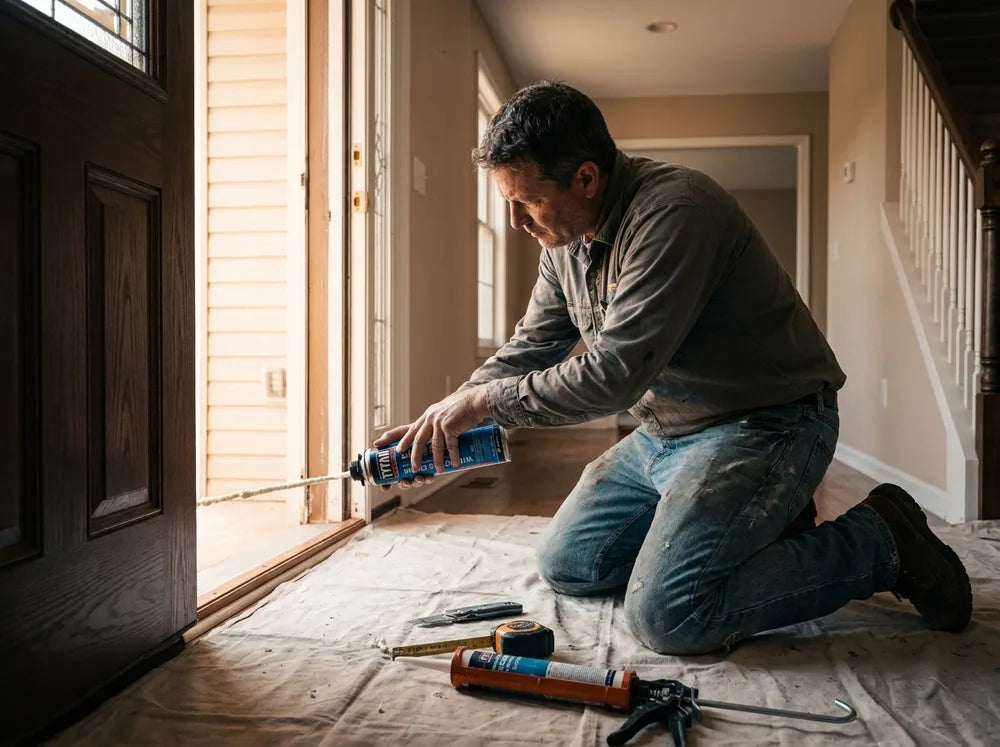
Gun-applied for control. Three steps from shaking the can to a clean, trimmed, paint-ready seal.
 01
01
Shake the can vigorously, thread it onto your foam gun, and you're ready to seal.
 02
02
Fill the gap about halfway. The low-expansion formula does the rest — without pressure on the frame.
 03
03
Once cured, trim flush with a blade for a clean, paintable, trim-ready finish.
Regular expanding foam keeps pushing after it fills the gap — enough to bow a window frame out of square. TYTAN's No-Bow low-expansion formula fills, seals, and stops.
Purpose-built for window and door installation, not general gap filling.
Predictable yield and cure, can after can, across the whole case.
Bonds to wood, vinyl, metal, masonry, and most building materials.
Cured foam resists moisture to protect the rough opening.
Stays flexible as frames expand and contract through the seasons.
Trim it flush, then paint or finish directly over the cured foam.
Rated for both sides of the wall, in a 41–86°F application range.
No-Bow technology seals the gap without stressing the frame.


A typical replacement window takes roughly a third to half a can to seal. One case handles a whole-house window package — or keeps a crew supplied across multiple jobs.
Drag the handle to compare an unsealed frame with a professionally sealed, energy-efficient finish.


Typical performance values for TYTAN Professional Window & Door insulating foam sealant. Always confirm against the technical data sheet for your jurisdiction.
Yes. It is formulated specifically as a low-expansion window and door foam. It fills the gap and stops, instead of continuing to expand with pressure the way general-purpose expanding foam does.
No — that is the point of the No-Bow technology. The low-pressure cure seals around the frame without pushing jambs out of square, so windows and doors keep operating smoothly.
Anyone can use it. It is a professional-grade product, but with a foam applicator gun and basic prep it is very approachable for DIY window, door, and draft-sealing projects.
Yes. These are gun-grade cans designed for a standard PU foam applicator gun, which gives you far better control, restartability, and less waste than straw cans.
Yes. Once fully cured and trimmed flush, the foam can be painted, stained, or covered with trim and casing.
Yes. After the foam cures, trim it flush with a utility knife or serrated blade for a clean, finish-ready surface.
Yes. It is commonly used around interior window and door frames, and cured foam can be trimmed and finished like any interior joint.
Yes. It is rated for interior and exterior applications. Like all PU foams, exterior foam should be protected from prolonged UV exposure with paint, sealant, or trim.
The application range is 41°F to 86°F (5°C to 30°C) for can, surface, and ambient temperature. Cans should be at room temperature for best yield.
It is typically tack-free in about 10–15 minutes, trimmable in roughly 30–60 minutes, and fully cured within 24 hours, depending on temperature, humidity, and bead size.
As a rule of thumb, one 24 oz can seals roughly two to three average replacement windows, so a 12-can case typically covers a whole-house window package with cans to spare.
Twelve 24 oz cans. Actual linear coverage depends on gap width and depth, but a case is sized for multi-window installs, whole-home air sealing, or keeping a crew stocked across jobs.
Regular gap-filling foam expands aggressively and can exert enough pressure to bow frames. Window & door foam expands minimally, cures at low pressure, and is engineered for frame-safe precision sealing.
Yes. It seals plumbing, electrical, and HVAC penetrations well. For penetrations that require a fire-rated assembly, use a code-approved firestop product instead.
Yes. Sealing the gap between frame and rough opening closes one of the most common air-leak paths in a home, reducing drafts and heating and cooling loss.
It bonds to wood, vinyl, aluminum, steel, masonry, brick, and most common building materials. It will not bond to polyethylene, silicone, or oily surfaces.
Up to about 15 months from the production date when stored properly. Buying a case for a season of work is well within its usable life.
Store cans upright in a cool, dry place between roughly 40°F and 77°F, away from direct sun and heat sources. Do not store them in a hot truck or van in summer.
No. Fill the gap about halfway — the foam expands to complete the fill. Overfilling wastes foam and creates more trimming work.
D7 Supply is an authorized distributor with real inventory, fast shipping, and commercial account support — so the case that shows up is fresh stock, on time, at contractor pricing.

Order the TYTAN Window & Door Foam Contractor Case from D7 Supply and put twelve cans of professional low-expansion foam on the shelf — ready for the next job.